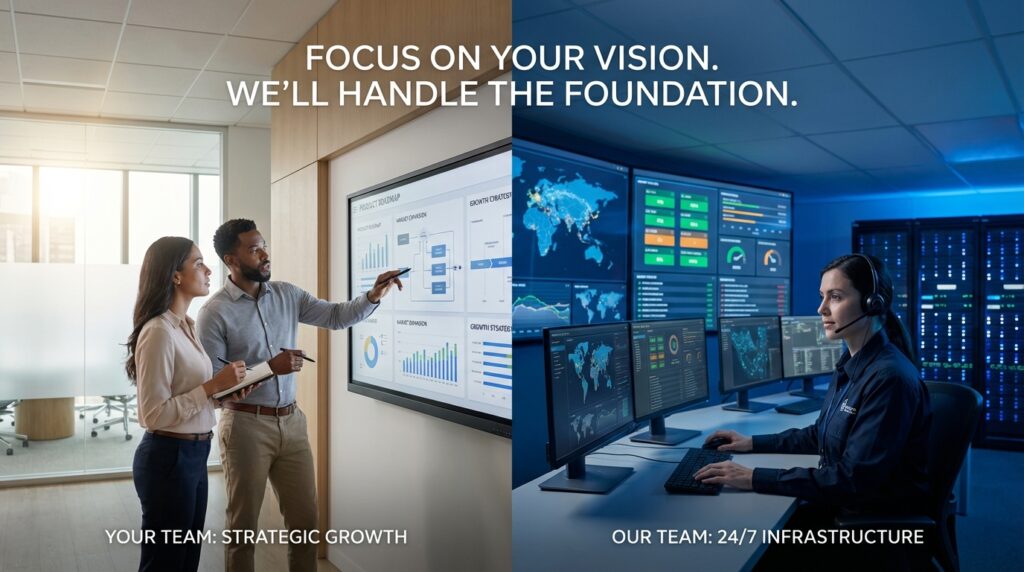

Managed cloud services let a third-party provider handle your cloud infrastructure so your internal team doesn’t have to. That covers everything from servers, storage, and networking to security, compliance, and ongoing optimisation.
Whether you’re running a public cloud environment on AWS or Azure, a private cloud, or a hybrid setup across both, the right managed cloud model removes operational overhead and gives your business access to specialised expertise without building it from scratch.
This guide covers how the model works, what to look for in a provider, and how to decide if it’s the right fit for your organisation. Read through to the end and you’ll have everything you need to make that call.
TL;DR
- Managed cloud = a provider runs your cloud so your team doesn’t have to
- Core benefits: cost predictability, compliance coverage, operational continuity, access to specialised expertise
- Main risk: vendor lock-in if you don’t negotiate contract terms upfront
- Right fit if: you’re in a regulated industry, running hybrid infrastructure, or your IT team is stretched
- Not the right fit if: you have a mature, dedicated cloud ops team with capacity to spare
- Book a free consultation with an Accrets Cloud Expert
What managed cloud services actually are
A managed cloud service provider (MCSP) takes responsibility for your cloud environment, the parts you want them to, or all of it. That could mean managing your AWS tenancy, overseeing a private OpenStack cluster, or running your entire hybrid setup across multiple platforms.
The cleaner way to understand this: there is a meaningful difference between buying a cloud service and managing it versus having someone manage it for you. An MCSP sits in the second category. They handle the configuration, monitoring, patching, security, and optimisation. You retain visibility and control over strategic decisions.
This is distinct from IT outsourcing more broadly, which can cover on-premises infrastructure, end-user support, and application management. Managed cloud specifically means the cloud layer.
Providers typically operate across three cloud environments:
Public cloud covers AWS, Azure, and Google Cloud Platform. The MCSP manages your tenancy: provisioning, cost governance, security policies, and access controls.
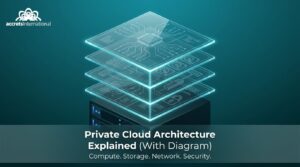
Private cloud is dedicated infrastructure hosted on-premises or in a colocation facility. The MCSP handles the hardware layer, virtualisation, and platform management.
Hybrid cloud is a mix of both, and where most APAC enterprises actually operate today. If you’re running workloads across environments, understanding how hybrid cloud providers operate in Singapore gives useful context on what “managed” means in practice at that complexity level.
How managed cloud services work — the full lifecycle
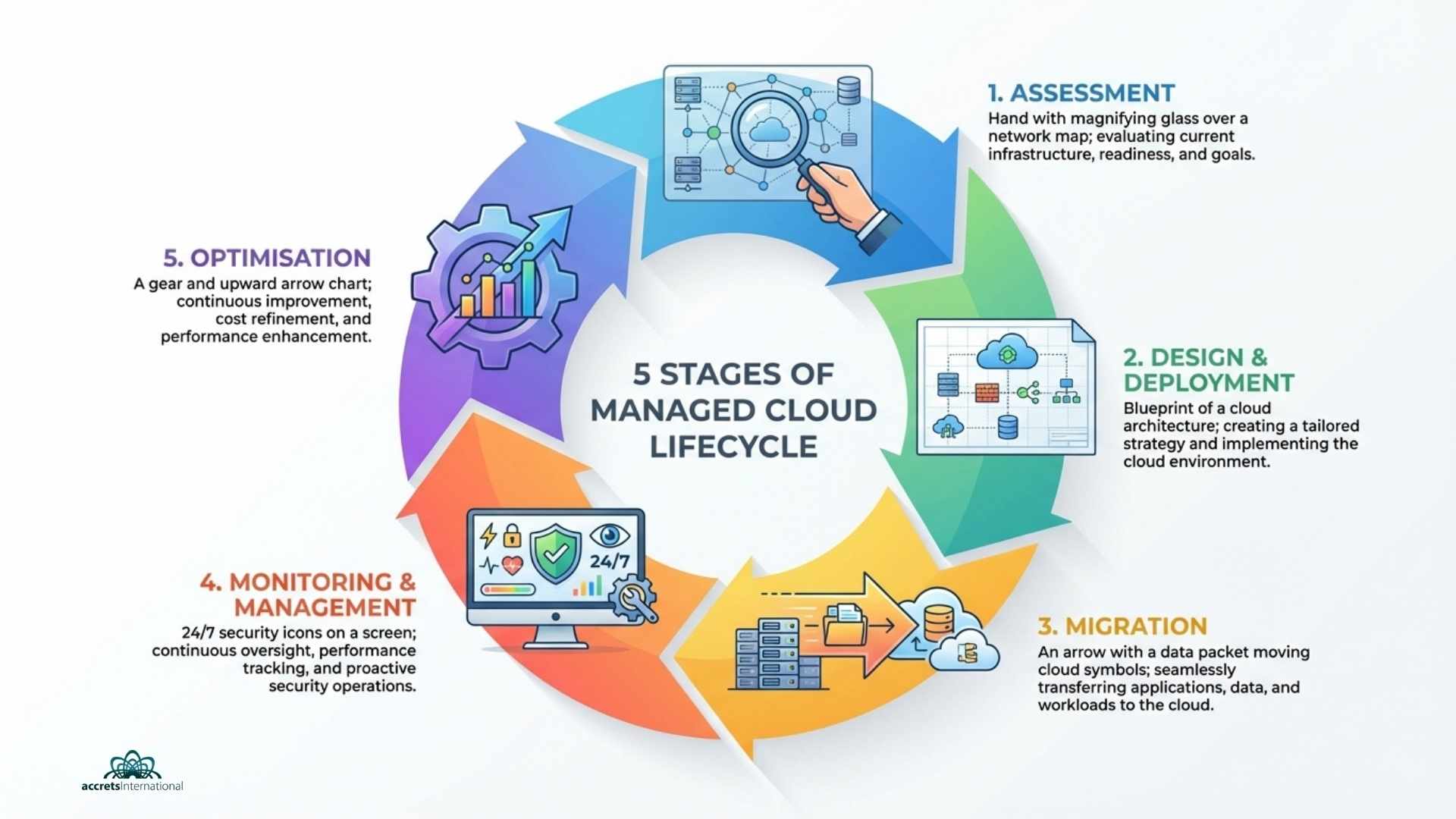
A managed cloud engagement doesn’t start with a contract signature and then go quiet. There are five stages, and the quality of each one determines whether you get value or frustration.
The first stage is assessment. A competent provider audits your existing infrastructure, maps your workloads, identifies security gaps, and documents your compliance requirements before recommending anything. This is where you find out if a provider is genuinely consultative or just selling you a package.
Design and deployment comes next. The provider builds the cloud architecture to match your specific operational and compliance requirements, not a template. For a mid-size financial services firm in Singapore, that typically means designing a hybrid environment that keeps regulated data on private infrastructure while shifting lower-sensitivity workloads to public cloud for scale.
Migration follows. The structured approach to cloud migration matters more than most businesses realise. Poorly sequenced migrations cause downtime, data integrity issues, and budget blowouts. McKinsey’s research found that 75% of cloud migrations run over budget, and that figure comes almost entirely from underplanned moves.
After go-live, the provider transitions into monitoring and management: 24/7 operations oversight, incident response, patch management, and capacity planning. This is the steady-state phase where IT infrastructure management services operate continuously, not reactively.
The final stage is optimisation, and it’s ongoing. A good MCSP reviews your cloud spend, resource utilisation, and performance metrics on a scheduled cadence and makes recommendations. This is where the structural advantages of infrastructure-as-a-service become tangible: you’re not locked into fixed hardware, so rightsizing is always possible.
Key benefits — and when they actually matter
Cost predictability is the one most organisations cite first. Cloud infrastructure on a subscription or consumption model converts unpredictable capital expenditure into a manageable operational line item. This matters when your finance team is trying to plan 12 months out and “it depends on server utilisation” isn’t an acceptable answer.
Access to specialised expertise is the second reason. A qualified MCSP brings certified architects, security engineers, and compliance specialists your organisation would otherwise need to hire, train, and retain. For most mid-size businesses, building that capability in-house costs more than the managed contract.
Scalability is real but often oversold. The honest version: managed cloud lets you scale infrastructure without hardware procurement lead times. If your workloads spike seasonally or you’re expanding into new APAC markets, that flexibility has tangible operational value.
Security and compliance coverage is where the stakes are highest. Backup and disaster recovery in a managed cloud context is one layer, but a quality provider also handles threat monitoring, vulnerability management, and audit readiness. For regulated sectors, this is not optional.
The last benefit is the most underrated: your internal team gets their time back. When cloud operations are handled externally, your engineers can focus on the work that actually moves your business forward instead of managing alerts and writing patch schedules. The top practices for IT infrastructure management consistently identify this reallocation as a driver of measurable productivity gains. For a fuller breakdown, the top 7 benefits of managed cloud services covers each advantage in more detail.
Managed cloud vs. self-managed vs. co-managed — which model fits?
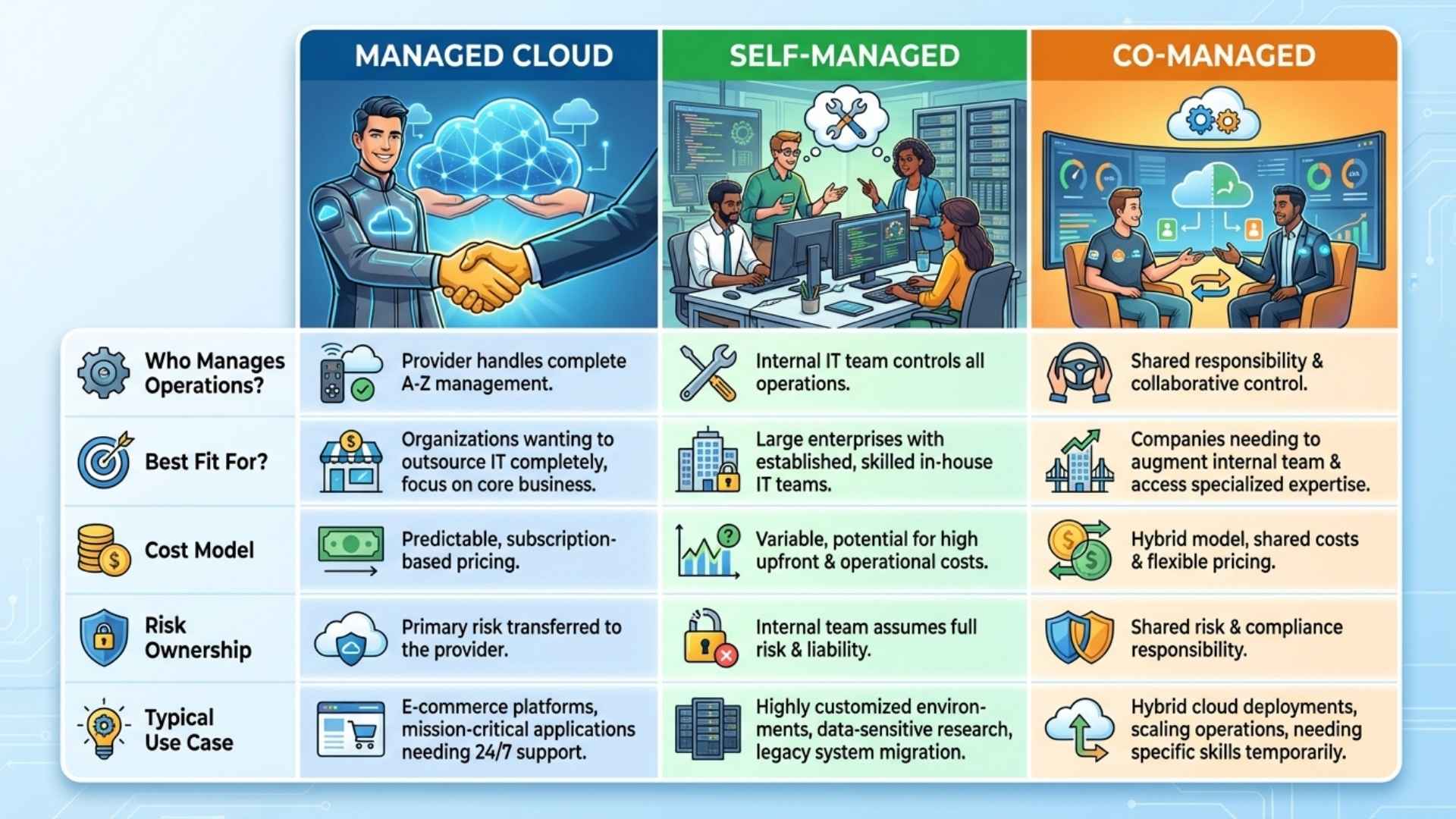
| Managed cloud | Self-managed | Co-managed | |
| Who manages operations | MCSP | Internal IT team | Both, split by scope |
| Best fit for | SMBs to enterprise in regulated sectors | Organisations with mature cloud ops teams | Enterprises with partial internal capacity |
| Cost model | Subscription or consumption-based | Internal headcount + tooling | Hybrid of both |
| Risk ownership | Shared with MCSP (per SLA) | Internal | Split by contract |
| Typical use case | Full cloud outsourcing | Large tech companies | Enterprises in cloud ops transition |
Managed hosting and cloud are not the same thing, and neither is managed cloud and co-managed cloud. The distinction matters when you’re writing a contract. In co-managed arrangements, scope boundaries need explicit definition because grey areas create accountability gaps.
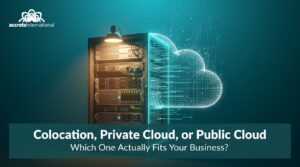
If you’re still deciding on the underlying architecture, the cloud vs. on-premise question typically comes before the managed vs. self-managed question. Settle the foundation first.
For organisations running workloads across AWS, Azure, and GCP simultaneously, how cloud platforms interoperate across different environments is a practical consideration when evaluating which management model is actually viable at your level of complexity.
Security, compliance, and data sovereignty in APAC
This is where most generic managed cloud articles stop being useful. Security and compliance in APAC isn’t a single standard. It depends on your industry, your data types, and where your customers are.
At minimum, a qualified MCSP should operate against ISO 27001 for information security management and SOC 2 for service organisation controls. For Singapore-based operations, the Personal Data Protection Act (PDPA) sets the baseline for how customer data is handled, stored, and transferred across borders.
For financial institutions, the Monetary Authority of Singapore’s Technology Risk Management (MAS TRM) guidelines set detailed requirements around cloud deployments, outsourcing arrangements, and vendor oversight. An MCSP working with FSIs in Singapore needs to demonstrate audit-ready compliance from day one, not as an add-on. What financial institutions in Singapore and Southeast Asia need from cloud banking solutions is a useful reference if this applies to your sector.
Government and public sector workloads follow different rules again. Singapore’s Government Commercial Cloud initiative has specific certification requirements for providers handling public sector data.
Beyond certifications, data sovereignty is a live issue across the region. Where your data physically resides matters for regulatory purposes, and some industries cannot allow data to leave Singapore or specific jurisdictions. Your provider needs a clear answer on this, not a vague “we comply with local regulations” response.
Cloud security consulting services across Southeast Asia covers this topic in more technical depth, including how to evaluate a provider’s security posture before signing. If business continuity is part of your compliance requirement, business continuity planning and disaster recovery frameworks lay out what an audit-ready plan looks like.
What to look for in a managed cloud services provider
Five questions worth asking any provider before you shortlist them:
Are they certified?
ISO 27001 and SOC 2 are table stakes. CSA STAR certification is an additional signal for cloud-specific security practices. If a provider can’t produce these, keep looking.
What do their SLAs actually cover?
Uptime commitments that exclude maintenance windows, incident response times that vary by severity tier, and exclusions buried in appendices are common. Get the SLA in plain language before you compare providers.
Can they manage multiple cloud platforms?
Many providers are strong on one hyperscaler and thin on the others. If your environment spans AWS and Azure, or you’re planning to move in that direction, managed IT services with genuine multi-cloud capability are harder to find than vendors typically claim.
Do they understand APAC regulatory requirements?
This is where the gap between a global provider and a regionally experienced one becomes visible. Managed service providers operating in Singapore with PDPA, MAS TRM, and sector-specific compliance experience operate in a different category from providers applying a generic global framework. Why partnering with the right managed cloud services provider matters goes further into this due diligence process.
Is the pricing model transparent?
Consumption-based, subscription, or bundled — each has different budget implications. Infrastructure IT outsourcing in Singapore operates across these models, and understanding which one fits your usage pattern is worth clarifying before you commit.
Common risks — and how to avoid them
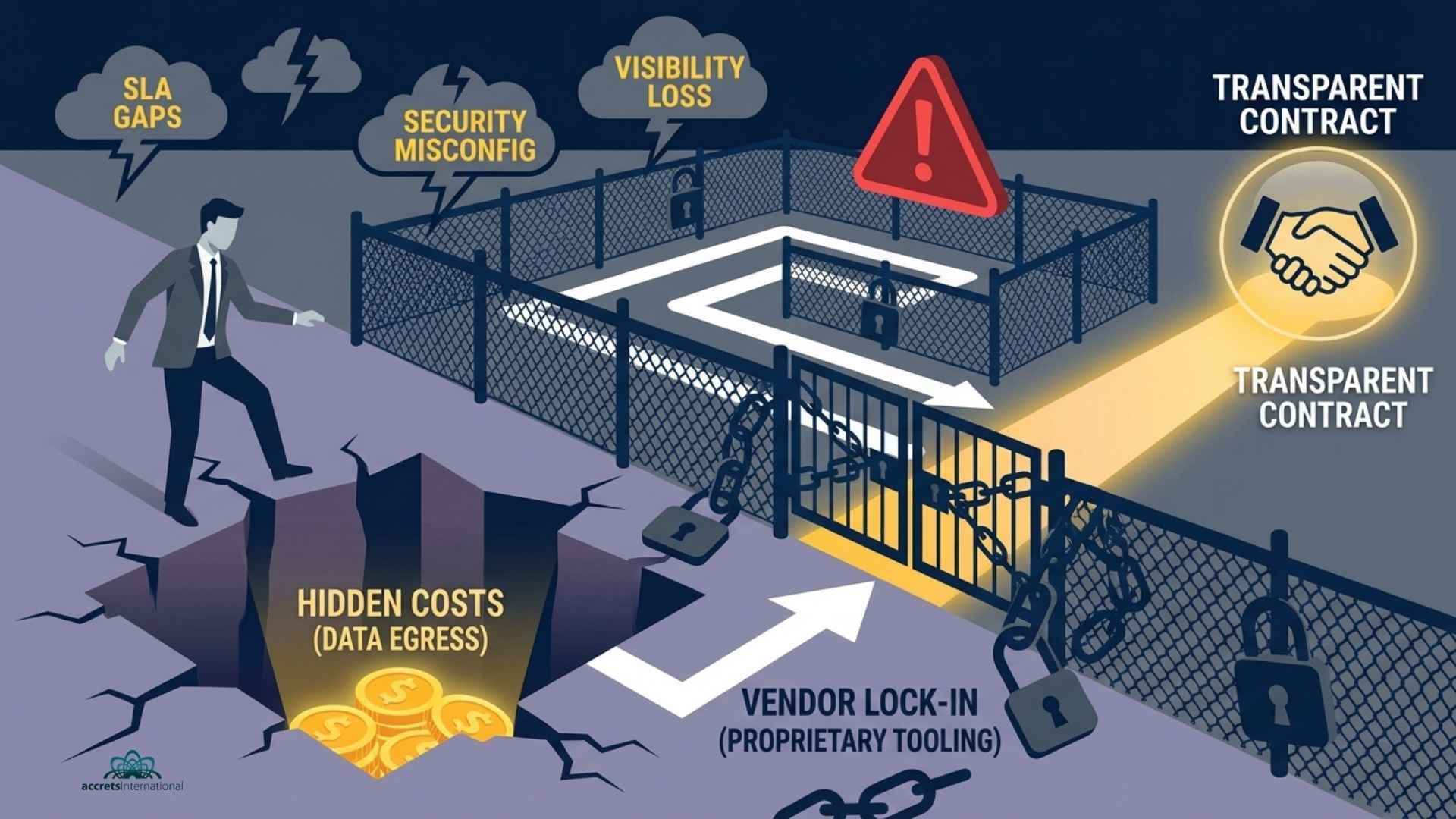
Vendor lock-in is the one organisations regret most in retrospect. Proprietary tooling, non-standard APIs, and multi-year contracts with steep exit penalties make switching providers expensive. Before you sign, ask specifically how your workloads would be migrated out if needed.
Hidden costs catch organisations off guard at invoice time. Data egress fees, premium support tier upsells, and per-user licence stacking can add 20 to 40 percent to the headline price. Read the service schedule in full.
SLA gaps are common and underappreciated. A “99.9% uptime guarantee” that excludes scheduled maintenance windows, planned upgrades, and force majeure events may cover far less than it appears. Know what’s excluded before you sign, not after an incident.
Visibility loss happens when providers operate as a black box. You pay the invoice, incidents get resolved, but you never see the underlying metrics. A good provider gives you a client portal, scheduled reporting, and clear escalation paths. If they can’t demonstrate this in a pre-sales conversation, it won’t improve post-contract.
IT Disaster Recovery as a Service addresses one of these risks directly, making sure continuity planning is built into the managed model rather than added later. Structured disaster recovery solutions give you a tested recovery plan, not just a backup schedule.
Is managed cloud right for your business? A quick decision check
Consider a managed cloud model if your internal IT team is stretched across operations and has no bandwidth for cloud strategy. If you’re in a regulated sector like financial services, healthcare, or government, and compliance requirements are increasing in complexity. If you’re running or planning a hybrid or multi-cloud environment across APAC markets where the management overhead is significant.
It may not be the right fit if you already have a mature, dedicated cloud operations team with the certifications, tools, and capacity to manage your environment well. Or if your cloud footprint is minimal — a single platform, low workload complexity — and the overhead of a managed contract outweighs the operational benefit.
How Accrets supports managed cloud for APAC and global teams
Accrets is a Singapore-headquartered managed cloud service provider working with organisations across APAC and internationally. The team handles cloud infrastructure management, hybrid cloud deployments, compliance-aligned security operations, and IT disaster recovery, with direct experience across Singapore’s regulatory environment. If you’re evaluating a managed cloud model or reassessing your current provider, see how Accrets approaches managed cloud services and why organisations choose to work with Accrets.Ready to explore what a managed cloud model looks like for your infrastructure? Fill in the form to book a free consultation with an Accrets Cloud Expert.

Dandy Pradana is an Digital Marketer and tech enthusiast focused on driving digital growth through smart infrastructure and automation. Aligned with Accrets’ mission, he bridges marketing strategy and cloud technology to help businesses scale securely and efficiently.