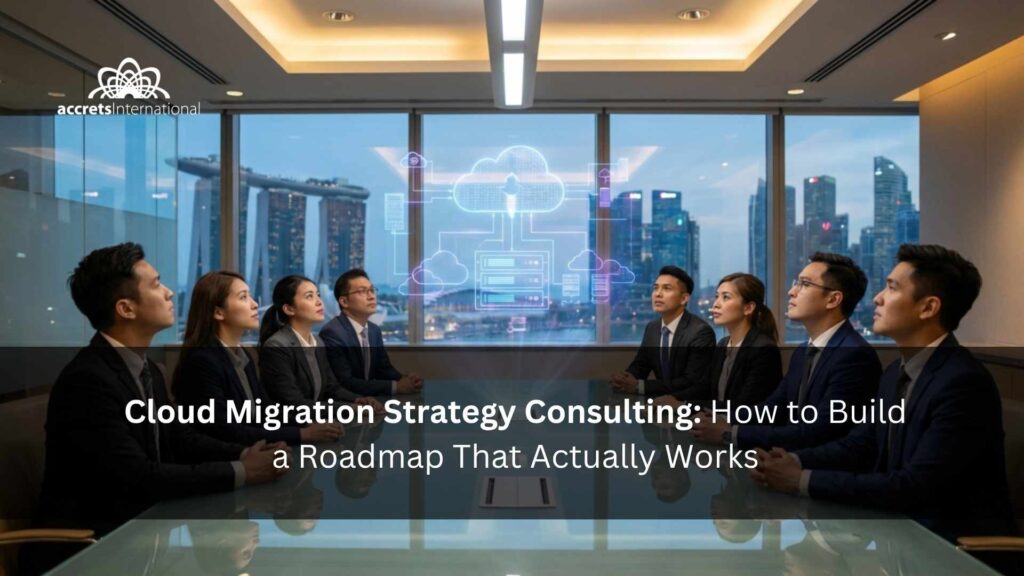

Cloud migration strategy consulting is the specialized process of assessing, planning, and executing a seamless transition of enterprise IT infrastructure to a cloud environment. By leveraging expert methodologies like dependency mapping and phased pilots, businesses can mitigate risks, control costs, and ensure zero downtime during complex data moves.
Whether you are scaling a global operation or optimizing a Singapore based enterprise, this comprehensive guide covers everything you need to know to build a resilient, future proof cloud framework. Let us explore the exact steps, hidden risks, and expert solutions together so you can make the most informed architectural decision by the end of this article.
TL;DR: The Core of Cloud Migration
- Discovery is mandatory: Proper IT infrastructure capacity planning prevents budget overruns and performance bottlenecks.
- Map your dependencies: Thorough dependency mapping stops critical applications from failing when moved.
- Always run a pilot: Pilot phases test infrastructure security and compliance in a controlled environment before full execution.
- Consulting brings accountability: Partnering with proven cloud migration strategy experts ensures a smooth transition without the trap of vendor lock in.
What is a Cloud Migration Strategy? (And Why You Need Consulting)
A cloud migration strategy is a highly documented, step by step action plan that dictates how an organization will transfer its digital assets, services, databases, and IT resources into the cloud. It involves deep technical evaluation to determine the best approach for each individual workload, whether that means rehosting, refactoring, or rebuilding entirely.
While the concept sounds straightforward, the execution is incredibly complex. Grasping the cloud computing and cloud storage difference is just the beginning. Without a strategic framework, companies frequently face unexpected downtime, severe data loss, or massive budget overruns. This is exactly why specialized consulting is necessary.
A seasoned consultant does not just move your data. They analyze your entire digital ecosystem, align the migration with your long term business goals, and apply the fundamentals of cloud computing to ensure your new environment is scalable, secure, and cost effective. They act as the architect for your digital transformation, ensuring that every move is calculated and risk free.

The 4 Core Phases of a Cloud Migration Strategy Framework
A successful migration does not happen overnight. It requires a disciplined, phased approach to ensure every variable is accounted for. Here are the four critical steps utilized in professional cloud migration strategy consulting.
Phase 1: Discovery and Infrastructure Readiness
You cannot migrate what you do not fully understand. The discovery phase involves a deep dive audit of your current on premise infrastructure, legacy applications, and shadow IT. This is where comprehensive IT infrastructure capacity planning becomes vital. Consultants will analyze your computing power, storage needs, and network bandwidth to define the exact requirements for your future cloud environment. Skipping this phase often leads to overprovisioning resources and wasting money.
Phase 2: Dependency Mapping and Choosing the Path
Once your inventory is clear, the next step is understanding how your applications talk to each other. Dependency mapping identifies which workloads rely on specific databases or legacy servers. Moving one without the other can break your entire system. During this phase, consultants will also help you choose the right migration method. For example, evaluating the differences between hot and cold migration in VMware will dictate how much downtime your business can tolerate during the actual move.
Phase 3: The Pilot Phase and Security Mapping
Never migrate everything at once. A professional strategy always includes a pilot phase where a non critical workload is moved first. This acts as a test run to validate the strategy and identify unseen bottlenecks. Simultaneously, consultants will map out your compliance requirements. Establishing robust infrastructure security in cloud computing during the pilot ensures that your data remains encrypted and compliant with global regulations before the heaviest workloads are transferred.
Phase 4: Full Migration and Operations
After a successful pilot, the full migration begins according to the strategic schedule. Data is synced, applications are cut over to the new environment, and legacy systems are safely decommissioned. However, the consulting journey does not end there. Post migration support and active cloud operations management are required to monitor performance, optimize monthly spending, and train your internal team on the new architecture.
Private, Public, or Hybrid? Selecting the Right Destination
One of the most critical decisions in your strategy is choosing where your data will actually live. There is no universal answer, which is why consultants spend significant time analyzing your specific regulatory and performance needs.
When debating cloud vs on-premise setups, many enterprises realize they need a blended approach. Public clouds offer massive scalability, but they may not suit highly sensitive financial or healthcare data. This leads many leaders to explore what private cloud hosting services are and why businesses prefer them for maximum control and security.
For multinational companies, especially US based firms operating in Southeast Asia, the ideal solution is often a hybrid model. Partnering with expert hybrid cloud providers in Singapore allows businesses to keep sensitive data on a secure private server while leveraging the public cloud for scalable web applications, perfectly balancing cost, speed, and compliance.
Common Cloud Migration Failures (And How to Avoid Them)
Even with the best intentions, migrations can fail if leadership ignores best practices. Understanding why companies fail at digital transformation is the first step in protecting your investment.
The most common failure is treating the cloud like a traditional data center, leading to a “lift and shift” approach that brings all the inefficiencies of the old system into the new one. Another massive oversight is ignoring disaster recovery during the transition. Professional consulting ensures that your business continuity planning and disaster recovery protocols are active and tested at every stage of the migration, guaranteeing that a sudden outage does not result in catastrophic data loss.
The Accrets Approach: Consulting That Leads to Accountable Execution
Strategy without execution is just theory. At Accrets, our cloud migration strategy consulting is built on total accountability. We do not just hand you a roadmap and walk away. We engineer the architecture, manage the migration, and provide ongoing operational support.
Understanding the difference between managed vs cloud services is crucial when choosing a partner. We operate as a true managed partner, offering open source, vendor agnostic solutions like OpenStack to ensure you never fall victim to vendor lock in. If you want to know exactly what managed cloud services actually entail, it means having a dedicated team of experts managing your infrastructure so your internal IT staff can focus on driving business growth.
Ready to Scope Your Migration Strategy?
A successful move to the cloud requires precision, experience, and a roadmap tailored to your exact business needs. Do not leave your digital transformation to chance.
Fill the form below for a free consultation with an Accrets Cloud Expert for cloud migration strategy consulting: https://www.accrets.com/contact-us

Dandy Pradana is an Digital Marketer and tech enthusiast focused on driving digital growth through smart infrastructure and automation. Aligned with Accrets’ mission, he bridges marketing strategy and cloud technology to help businesses scale securely and efficiently.